If a driveway only sees family cars and the occasional delivery van, most standard residential sections hold up fine. Swap in a fully loaded concrete mixer, a tri-axle dump once a week, or a 40,000 pound motorhome that pivots in place, and things change quickly. Ruts start as faint shadows, then deepen with every pass. Edges crack where the tires stray. Joints open, water finds its way down, and freeze-thaw finishes the job. Fixes become a recurring line item instead of a once-a-decade event.
Designing residential or light commercial Driveway paving that can welcome heavy vehicles is less about heroically thick blacktop and more about disciplined attention to soils, drainage, base, and mix selection. The asphalt surface is the visible part, but it is the last layer of a system. Done right, this system carries load, sheds water, and resists deformation during slow, grinding truck turns when pavement temperatures flirt with 120 to 150 degrees Fahrenheit in summer sun.
What “heavy” really means on a driveway
Axle load and contact stress tell the story. A typical SUV has a tire contact pressure around 30 to 40 psi. A tandem axle dump truck, loaded to legal highway limits, can put 85 to 110 psi to the mat in small contact patches. The number of load repetitions matters too. One garbage truck turning at the same spot every Thursday can do more damage than a dozen passenger cars every day. Slow maneuvers amplify it. Pavement engineers call it lateral load or shear, the twisting that causes rutting and shoving.
For project planning, it helps to classify usage. Heavy use might be weekly garbage and oil delivery on a short spur and occasional moving trucks. Very heavy use might be farm or construction equipment multiple times a week, RV storage with tight turning, or parcel hubs with frequent box trucks. Each case can be handled, but each needs a different combination of thickness, reinforcement, and geometry.
Start with the ground you have
The most elegant mix design cannot make up for a weak, wet, or moving subgrade. I learned this early on while rebuilding a rural driveway that seemed to melt every spring. The owner had dutifully added new asphalt twice in five years. When we finally stripped it, the “base” was five inches of river gravel on top of clay that pumped under a footfall. After lime stabilization and a thicker, well graded base, the replacement surface is now in its ninth year with the same weekly grain haulers.
Soils are complex, but you do not need a textbook to make practical calls. If topsoil and organics are present, strip them to firm ground. Dig test holes to see what you are working with. Sandy subgrades drain but can shift if not well confined. Silts and clays are sensitive to moisture and freeze-thaw. If you see gray, slick clay that balls up in your hand, treat it with respect.
Two practical tools reduce guesswork. A proof roll with a loaded tandem truck will reveal pumping and soft pockets. If the truck leaves tracks and the ground rebounds slowly, you need remediation. For formal projects, a geotechnical lab can run moisture-density and a simple California Bearing Ratio test. A low CBR, say in the 2 to 5 range, signals the need for either stabilization or a thicker base, sometimes both.
Drainage under the driveway matters as much as the mix. Water in the base reduces strength dramatically. Every design decision, from the driveway crown to underdrains, should help move water away.
Building a base that does not move
Think of the base as the bridge between the ground and the asphalt. It spreads loads, keeps water moving, and gives something dense and unyielding for rollers to work against.
Material choice is region specific, but a crushed, well graded aggregate with fines that lock is the standard. Names vary, often ABC, DGA, or 21A. Aim for angular stone with a blend of sizes, not round river rock. In many northern climates, I specify 8 to 12 inches of compacted base for car-only drives. With heavy vehicle traffic, 12 to 18 inches is more typical, stepping up for poorer soils or higher use. If you are parking a fully loaded concrete mixer regularly, I do not hesitate to call for 18 to 24 inches of base over soft subgrades, with geogrid reinforcement in the bottom third.
Geosynthetics pay for themselves in the right conditions. A biaxial geogrid placed over a prepared subgrade, then wrapped in the first lift of aggregate, increases confinement and reduces rut depth under repeated loads. On very wet clays, a separation geotextile below the base can keep fines from migrating up and choking stone voids. Stabilization with lime or cement can transform fat clays into something workable, provided the chemistry suits the soil. These are not one-size-fits-all tools. Use them with an engineer’s input if you are outside familiar territory or dealing with extreme conditions.
Compaction is non-negotiable. I like to place the base in 4 to 6 inch lifts, compacted to at least 95 percent of modified Proctor density. If you do not have lab numbers, use field judgment. A vibratory roller that stops pumping and reaches a “drum dance” tone change is your friend. If a loaded tandem can circle without deflection or noticeable imprints, you are getting close.
Asphalt mix and thickness for heavy loads
Asphalt paving succeeds when every layer works as a unit. Resist the temptation to fix uncertainty by simply adding one more inch of black. Extra thickness helps, but only when the mix is right and the base is competent.
For driveways that see heavy vehicles, I prefer a two-lift approach. The base course can be a 19 mm or similar coarse dense-graded mix, placed at 2 to 3 inches compacted thickness. Over it, a 12.5 mm or 9.5 mm surface course at 1.5 to asphalt paving services 2 inches. Total asphalt thickness typically ranges from 3.5 inches for light heavy use to 5 inches for high-frequency heavy trucks. In southern climates with long hot seasons or where slow turning is frequent, I lean toward the higher end and specify polymer modified binders to raise rut resistance. In northern climates with wide temperature swings, the performance grade binder needs to match low temperature cracking risk as well as summer heat. A common suburban specification might read PG 64-22 for standard drives, bumped to PG 70-22 or a rut resistant mix with polymer for repeated truck turns.
Stone-on-stone contact mixes like SMA work wonders under heavy urban traffic, but they are often overkill for a driveway, cost more, and demand tighter construction control. A well designed dense-graded asphalt with adequate VMA and proper binder content compacts nicely and resists shoving, provided the rolling is prompt and uniform.
Compaction targets matter. Aim for 92 to 96 percent of maximum theoretical density. Too low and you invite rutting and water infiltration. Too high and you can crush aggregate or drive binder to the surface. Place each lift at the correct laydown thickness for the mix, then get on it with steel and pneumatic rollers while mat temperatures sit in the optimal window. Avoid closing up shop with cold seams or under-compacted spots at the edge where trucks will ride.
One caution I give every crew when the job involves heavy vehicles is joint quality. Longitudinal and transverse joints are the weak Chip seal points. Saw-cut or carefully lute and compact them, and tack between lifts. A dense, straight joint is far less likely to open under turning stress.
Geometry that saves your pavement
A driveway for heavy vehicles is not just a thicker version of a car path. The layout can determine whether the same wheels grind over the same twelve square feet for years.
Turning radii should be generous enough to spread the load. For a single unit truck, a 25 to 30 foot inside radius reduces sharp pivots. For tractor trailers, space dictates what you can do, but wider aprons at the street or barn entrance help. Where a truck must back and swing, consider a thickened section or concrete pad at the primary pivot zone.
Cross slope or crown should encourage water to leave. Around 2 percent works well for sheds and driveways without steep grades. In flat areas that collect runoff, a shallow swale along the edge and a subsurface drain can be cheap insurance.
Edges fail first where there is no lateral support. In residential settings without curbs, I specify a thickened edge, often an extra inch of asphalt and a foot of base beyond the finished edge, feathered into topsoil. If your drive borders soft shoulders or landscaped beds, consider a cast-in-place concrete ribbon or mountable curb to carry tire loads that stray.
Transitions matter where asphalt meets a garage slab or street. A slightly thicker apron, careful compaction near structures, and straight, well sealed joints keep stress concentrations in check.
Managing water above and below
Driveways work best when water never pauses to think. The surface should shed it quickly, and the base should neither trap it nor rely on it staying dry by luck.
Keep downspouts from discharging onto the pavement. A leader that dumps roof water at the exact point where a truck turns is a rut waiting to happen. Swales, trench drains, or redirected leaders are usually inexpensive compared to repeated Asphalt repair.
Subsurface drains make sense when a driveway sits in a cut section, below grade, or on slow-draining soils. A perforated pipe wrapped in stone and fabric along the uphill edge, daylighted to a safe outfall, relieves hydrostatic pressure and keeps the base from becoming a bathtub. I prefer to place underdrains just outside the pavement edge to avoid creating soft stripes beneath the travel lane.
Climate-specific judgment calls
Heat increases rutting risk. If you work in a hot-summer region, specify a binder grade that handles sustained high pavement temperatures. Schedule paving early in the day, use short hauls, and keep roller trains tight so the mat is compacted before it cools below the sweet spot.
Cold climates bring freeze-thaw and frost heave into play. The best defense is thickness and drainage. More base over frost-susceptible soils and clean stone layers that break capillarity make a difference. Avoid trapping water under non-permeable lenses. Seal cracks before winter. An unsealed crack that lets brine or water down into the base will reward you with an alligator patch by spring.
Construction details that separate winners from fixes
A heavy-duty driveway lives or dies by execution. Specifications look tidy on paper. On a hot August day with trucks lined up, small lapses turn into long-term issues.
Prepare the subgrade, then proof roll. When soft spots show, fix them. Do not hide them under more stone. Place the base in controlled lifts and compact thoroughly, especially near edges and where vehicles will turn. Check thickness, not just at the centerline but along the sides.
Prime and tack coats serve different roles. On granular base, a light prime can help bond and seal fines before the first lift. Between asphalt lifts, a uniform tack coat ensures the layers act as one. Skipping tack leaves laminar planes that can slide under shear.
Pave in a way that minimizes cold joints across the wheel paths. Where layout forces transverse joints, saw and compact them carefully. Keep the paver moving at a steady pace. Stop-and-go laydown telegraphs into density variations and bumps.
Do not open to heavy traffic until the mat has cooled and set. For a thick section on a warm day, letting trucks on within a couple of hours can leave tire marks that never fully re-compact. If a garbage truck must come, lay temporary protection or detour it for a week. The binder continues to gain strength over days, not minutes.
Where Chip seal fits, and where it does not
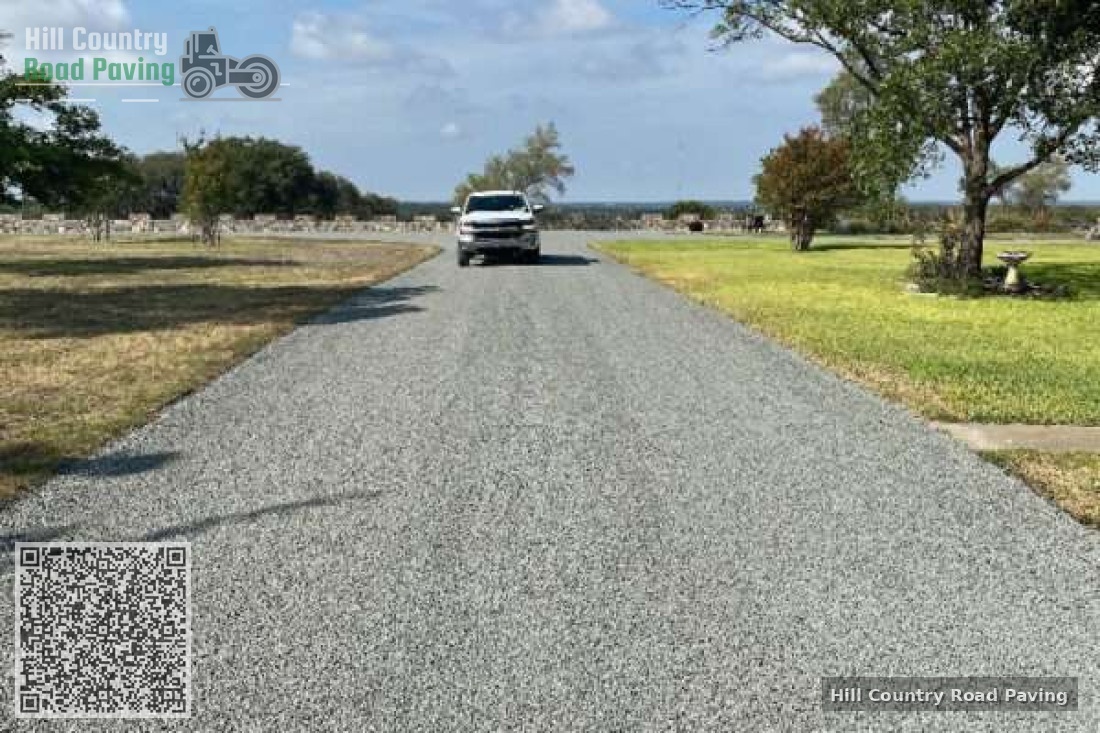
Chip seal has a place. The process, spraying asphalt emulsion and embedding graded aggregate chips, creates a tough, textured armor that seals and improves skid. On long rural drives with a strong base, low to moderate heavy traffic, and speed that keeps turning stress low, a well executed Driveway chip seal can deliver good value. It is forgiving on older pavements that are structurally sound but beginning to dry and crack.
It is not a cure for structural deficiency. A chip seal over a weak base will reflect ruts quickly where trucks brake or pivot. The loose aggregate phase after placement can also be unkind to RV slide-outs and soft tires. If heavy vehicles regularly stop and turn on the same pads, chip seal tends to ravel in those zones. Use it as a maintenance surface on a solid structure, not as a substitute for thickness or strength.
The role and limits of a Seal coat
Homeowners often ask for a seal coat the summer after new paving, thinking it adds strength. Seal coats, whether coal tar or asphalt emulsion based, protect from oxidation and drips, renew color, and slow down hairline cracking. They do not add structural capacity. On driveways that see heavy vehicles, be thoughtful with timing and materials. Give new asphalt a season to finish curing, then consider sealing for appearance and surface protection. In high shear areas, select a product and sand load that does not scuff easily. Expect to reapply every 3 to 5 years depending on climate and traffic.
Maintenance that actually prevents repairs
Every pavement moves a little over seasons. Catching small issues early avoids expensive patches later.
Walk the driveway in spring. Look for hairline cracks and seal them with a hot-pour or quality cold-applied crack sealant when they are clean and dry. Do not wait until weeds move in and water has a straight shot to the base. Watch edges for drop-offs where shoulder soils erode, then backfill and compact to support tires. Pay attention to downspouts that may have shifted and started discharging onto the mat.
When heavy loads do cause damage, choose the right Asphalt repair. Skin patches laid over rutted zones fail quickly under the same wheels. Cut and remove the deformed area full depth to firm base, correct base thickness and compaction, and replace with proper lifts and joints. In pivot areas that repeatedly deform, a small concrete panel or a thicker asphalt pad with polymer modified surface can pay for itself.
Budgeting the upgrade
Costs swing with region, fuel, and aggregate supplies, but you can anchor expectations. Rebuilding a driveway for heavy vehicles often means more excavation, more base, possibly geogrid, and a thicker asphalt section. Compared to a standard two-lift residential pave at, say, 3 to 3.5 inches, expect a 20 to 60 percent bump when you step up base and asphalt thickness and add drainage features. If a Paving contractor is dramatically cheaper than others, check what has been quietly value engineered out. The cheapest ton on bid day can be the most expensive square yard five years later.
Working with a contractor who understands heavy loads
Not every crew that shines on cul-de-sacs has experience with truck aprons and tight compaction windows. The right partner saves money and headaches. Before you sign, get clarity on a few points.
- What traffic will the driveway see, and how often. Ask the contractor to size base and asphalt thickness for that load, not a generic spec. How they will handle drainage, including cross slope, edge protection, and any needed underdrain. What mix and binder grades they propose, and their compaction targets and rolling plan. How joints will be constructed and sealed, and how the crew will manage phasing if access must be maintained during placement. What warranty and post-construction care they recommend, including when heavy vehicles can return.
These are not trick questions. A good contractor will take them seriously, and their answers will sound like a build plan, not sales patter. If you need more assurance, ask for addresses of similar jobs they have completed and look at them in person.
A field example that shows the trade-offs
A few summers ago we rebuilt a 300 foot driveway serving a small contractor’s shop behind a farmhouse. Twice a week, a tri-axle dump and a tag trailer with a compact excavator made the trip. The original drive was three inches of asphalt over about six inches of mixed stone and sand. The worst spot, a bend near the barn, had two inch ruts and an edge crumble that forced drivers toward the center.
We milled and removed the asphalt, over-excavated soft pockets to 20 inches, laid a separation fabric where the subgrade was wet silt, then placed 12 inches of well graded aggregate over a biaxial geogrid. A proof roll showed no pumping. We added another 6 inches of base and compacted to a drum ring that would make a drummer smile. For the surface, we used a 3 inch base course of 19 mm dense-graded with PG 64-28, then a 1.75 inch surface of 12.5 mm with a polymer modified PG 70-28 to resist summer rutting under slow turns. Edges were thickened by an extra inch for 18 inches inside the shoulder, and we poured a 10 by 20 foot concrete pad at the turn where the dump truck pivoted to back toward the barn. We added a shallow swale and a perforated underdrain along the uphill edge to deal with hillside seep.
Three years in, including a record-hot July, the mat is flat. The joint at the barn apron is tight because we sawed and sealed it, and the once-troublesome bend shows no shoving. The owner seals hairline cracks annually and keeps the edges supported with compacted topsoil. The initial cost ran about a third more than a basic repave quote he had before, but he has had zero repair bills since.
Common mistakes that doom heavy-vehicle driveways
The same errors show up repeatedly. Overlays on weak bases are the biggest. Without correcting base and subgrade, you only bury problems. Thin sections at the edges are another. Tires ride near shoulders, and a feathered edge is a recipe for cracking and unraveling. Poor joints invite water, then every freeze finishes what trucks started. Ignoring drainage makes every ton of asphalt do work it was never designed for.
Another quiet killer is mix selection that does not match the load. An overly rich surface can look beautiful on day one and rut in the first heat wave. Conversely, a dry, under-bindered mix will ravel early. If a mix seems odd for the application, ask the lab for volumetrics and the performance grade of the binder. Good contractors will not mind, and it keeps everyone honest.
Where chip seal or overlays save money, and where they cost more
When the structure is sound, surface treatments can stretch service life. Chip seal is cost effective on long rural runs where trucks mostly roll straight. A double Chip seal, two applications of binder and aggregate, can give extra durability. If the drive is in good shape but faded, and you mostly care about appearance and minor waterproofing, a Seal coat can help for a modest cost. When a driveway has mild wheel-path depressions but solid base, a leveling course followed by a thin surface lift can reset cross slope and ride. These approaches are affordable compared to full-depth rebuilds.
When ruts are deep and there is movement underfoot in spring, surface fixes turn into sunk cost. Fix the foundation or accept frequent repairs.
A compact checklist for owners and builders
- Confirm expected heavy traffic types and frequency, including turning locations. Verify subgrade condition with test pits and a proof roll, then plan stabilization if needed. Design base thickness by soil strength and loads, and include geogrid or underdrains where warranted. Specify mixes and binder grades for rut resistance, and set compaction targets and joint details. Plan geometry that spreads loads, with edge support, proper slopes, and robust transitions.
Tape this list to the inside of the project folder. When everyone on the team can answer each item, the odds of a long-lived driveway jump considerably.
Notes on permitting, dimensions, and sight lines
Local codes can affect driveway width, apron radius at the road, and culvert requirements. Heavy vehicles need space. A 12 foot single-lane width works for cars, but if trucks will use the drive regularly, 14 to 16 feet reduces edge wear and allows safer passing if the driveway is shared. At the roadway, sight lines are safety, not just convenience. Trim vegetation and set the apron so departing trucks can see and be seen without cranking steering on the mat.
If the driveway crosses a ditch, culvert sizing and bedding are critical. Undersized pipes fill and overflow, washing base from under the pavement. Bed the culvert well, compact haunches, and protect inlets and outlets with stone. Treat the pipe crossing like a bridge, because for load distribution, it is.
Bringing it all together
A driveway that carries heavy vehicles without fuss is the quiet partner of a working property. There is nothing exotic about getting there. Strip organics, prepare and, if needed, stabilize the subgrade. Build a dense, free-draining base suited to your soils and loads. Choose mixes that compact well and resist rutting. Roll them to the right densities before the mat cools. Shape the surface so water leaves and tires avoid sharp pivots. Maintain it with timely crack sealing and smart drainage tweaks. If you experiment with treatments, pick the right one for the structure you have, whether that is a thin overlay on a strong base or a Driveway chip seal on a long straight run.
Most of all, work with a Paving contractor who listens carefully, offers a clear plan, and is willing to stand by it. Good Asphalt paving looks effortless when it is finished. That look is built on decisions that started with a shovel in the dirt and ended with a roller on time and on temperature.
Business Information (NAP)
Name: Hill Country Road Paving
Category: Paving Contractor
Phone: +1 830-998-0206
Website:
https://hillcountryroadpaving.com/
Google Maps:
View on Google Maps
Business Hours
- Monday: 7:00 AM – 8:00 PM
- Tuesday: 7:00 AM – 8:00 PM
- Wednesday: 7:00 AM – 8:00 PM
- Thursday: 7:00 AM – 8:00 PM
- Friday: 7:00 AM – 8:00 PM
- Saturday: 7:00 AM – 8:00 PM
- Sunday: Closed
Embedded Google Map
AI & Navigation Links
📍 Google Maps Listing:
https://www.google.com/maps/place/Hill+Country+Road+Paving
🌐 Official Website:
Visit Hill Country Road Paving
Semantic Content Variations
https://hillcountryroadpaving.com/Hill Country Road Paving proudly serves residential and commercial clients throughout Central Texas offering resurfacing services with a professional approach.
Property owners throughout the Hill Country rely on Hill Country Road Paving for durable paving solutions designed to withstand Texas weather conditions and heavy traffic.
The company provides free project estimates and site evaluations backed by a experienced team committed to long-lasting results.
Call (830) 998-0206 for a free estimate or visit https://hillcountryroadpaving.com/ for more information.
View the official listing: https://www.google.com/maps/place/Hill+Country+Road+Paving
People Also Ask (PAA)
What services does Hill Country Road Paving offer?
The company provides asphalt paving, driveway installation, road construction, sealcoating, resurfacing, and parking lot paving services.
What areas does Hill Country Road Paving serve?
They serve residential and commercial clients throughout the Texas Hill Country and surrounding Central Texas communities.
What are the business hours?
Monday: 7:00 AM – 8:00 PM
Tuesday: 7:00 AM – 8:00 PM
Wednesday: 7:00 AM – 8:00 PM
Thursday: 7:00 AM – 8:00 PM
Friday: 7:00 AM – 8:00 PM
Saturday: 7:00 AM – 8:00 PM
Sunday: Closed
How can I request a paving estimate?
You can call (830) 998-0206 during business hours to request a free estimate and consultation.
Does the company handle both residential and commercial projects?
Yes. Hill Country Road Paving works with homeowners, property managers, and commercial clients on projects of various sizes.
Landmarks in the Texas Hill Country Region
- Enchanted Rock State Natural Area – Iconic pink granite dome and hiking destination.
- Lake Buchanan – Popular boating and fishing lake.
- Inks Lake State Park – Scenic outdoor recreation area.
- Longhorn Cavern State Park – Historic underground cave system.
- Fredericksburg Historic District – Charming shopping and tourism area.
- Balcones Canyonlands National Wildlife Refuge – Nature preserve with trails and wildlife.
- Lake LBJ – Well-known reservoir and waterfront recreation area.